The Cenote: Poetry Review
DIGITAL BURNOUT
The Cenote provides a place for poets to submit work free from the excessive editorial constraints of the digitally distracted Anthropocene. We hope to jettison the word “accessibility” entirely. The trend towards making poems “accessible” has, in fact, excluded many poems from publication simply for demanding more than the usual clickbait-happy, screentime-fatigued attention span. Such reactionary editorial strictures have disallowed more ambitious work, favoring instead the “twitterature” of an easy-to-scroll era. Of course, this does not mean that a poem must be entirely “inaccessible” or obscurantist: we simply wish to remove this restriction from any poems submitted here.
LITERARY UPSTARTS
Nor will you be censured here for responding to the tradition or for reinstating the term “literary” in some sense? You will not be rejected if you brazenly betray some curious peeping at the classics, at the canon, or let’s be honest, at the many canons on offer. Likewise, you will not be shunned for writing against various traditions, for rebelling against the canonical or for being “anti-literary,” whatever that might end up meaning.
LONG FORM/SHORT FORM
The Cenote will publish both short and long form poems in each issue. Sections from long poems/epics are welcome. We will also feature mixed media poems and experimental typographies.
POLYGLOT ASPIRATIONS
We hope to feature poems, which skillfully mix English with other languages. In the long run, we hope to attract an international cadre of poets.
THE NAME
A cenote is a sinkhole formed when rainwater dissolves limestone, exposing a freshwater aquifer below. The word derives from Yucatec Maya ts’ono’ot (a sacred/natural well).
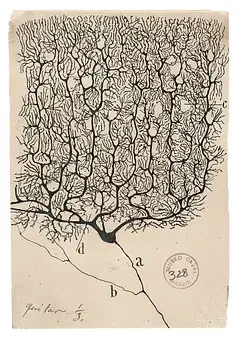
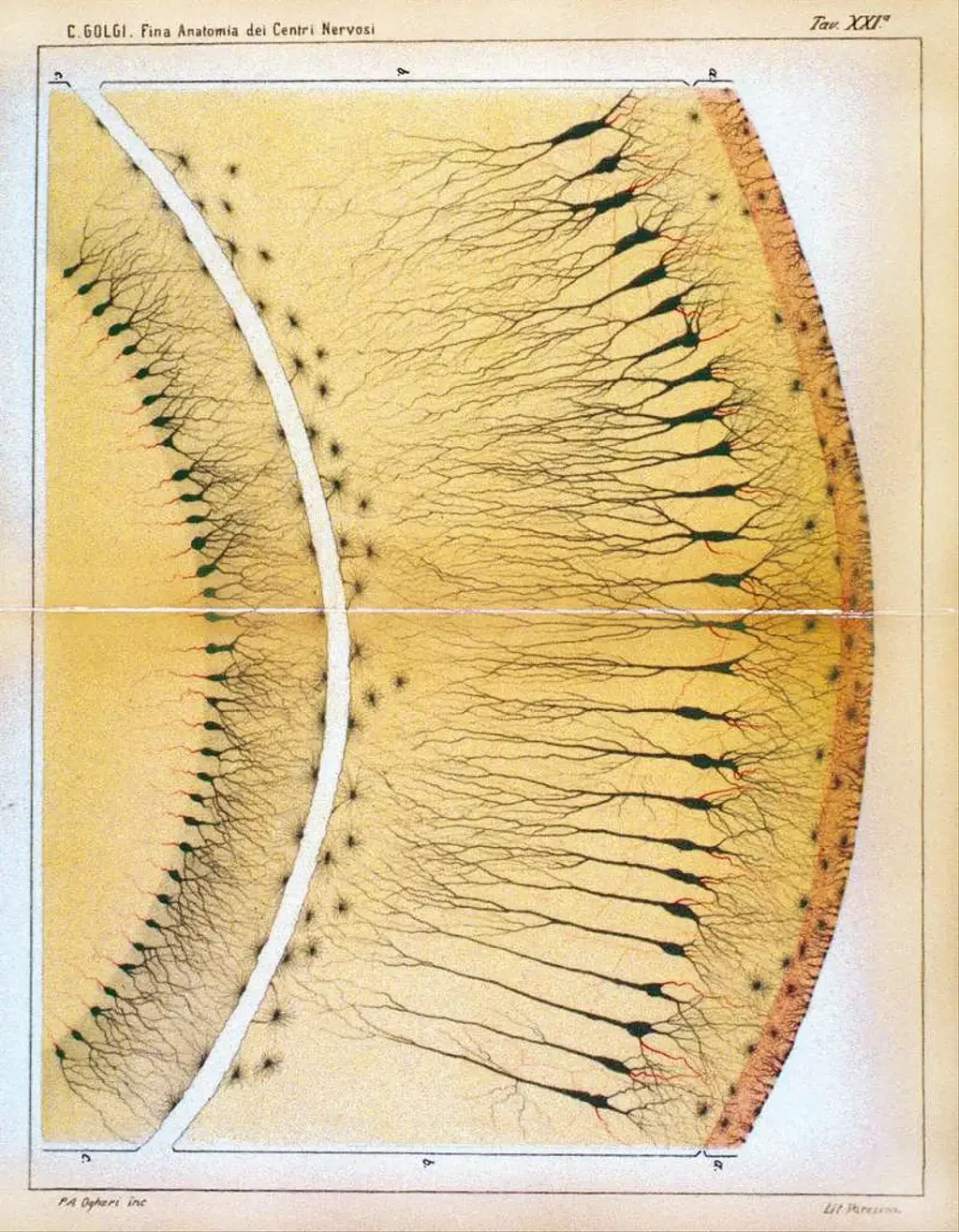
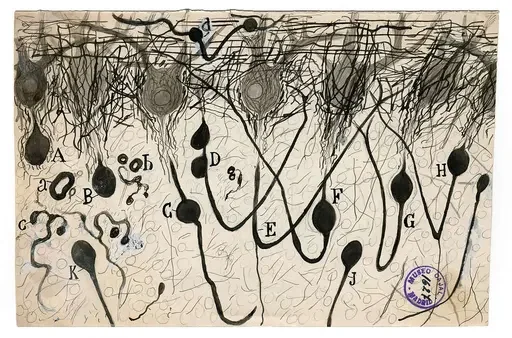
Image Credits: 1.) Santiago Ramón y Cajal, "Axon of Purkinje neurons in the cerebellum of a drowned man", circa 1900; 2.) Santiago Ramón y Cajal, Purkinje Cell from the Human Cerebellum, circa 1900; 3.) Camillo Golgi, Sulla fina anatomia degli organi centrali del sistema nervoso (On the Fine Anatomy of the Central Organs of the Nervous System), 1885.